
In the world of mathematics, where numbers dance and equations unfold like stories, the ability to visualize and draw out solutions is a powerful skill. Today, we explore the significance of encouraging students to illustrate their mathematical thinking.
The Art of Mathematical Visualization: Mathematics is not just about crunching numbers; it’s about understanding and solving real-world problems. Visualizing mathematical concepts through drawings helps students make sense of abstract ideas, transforming them into tangible images that enhance comprehension. When students draw what’s happening in a word problem, they engage multiple senses, reinforcing their understanding and retention.
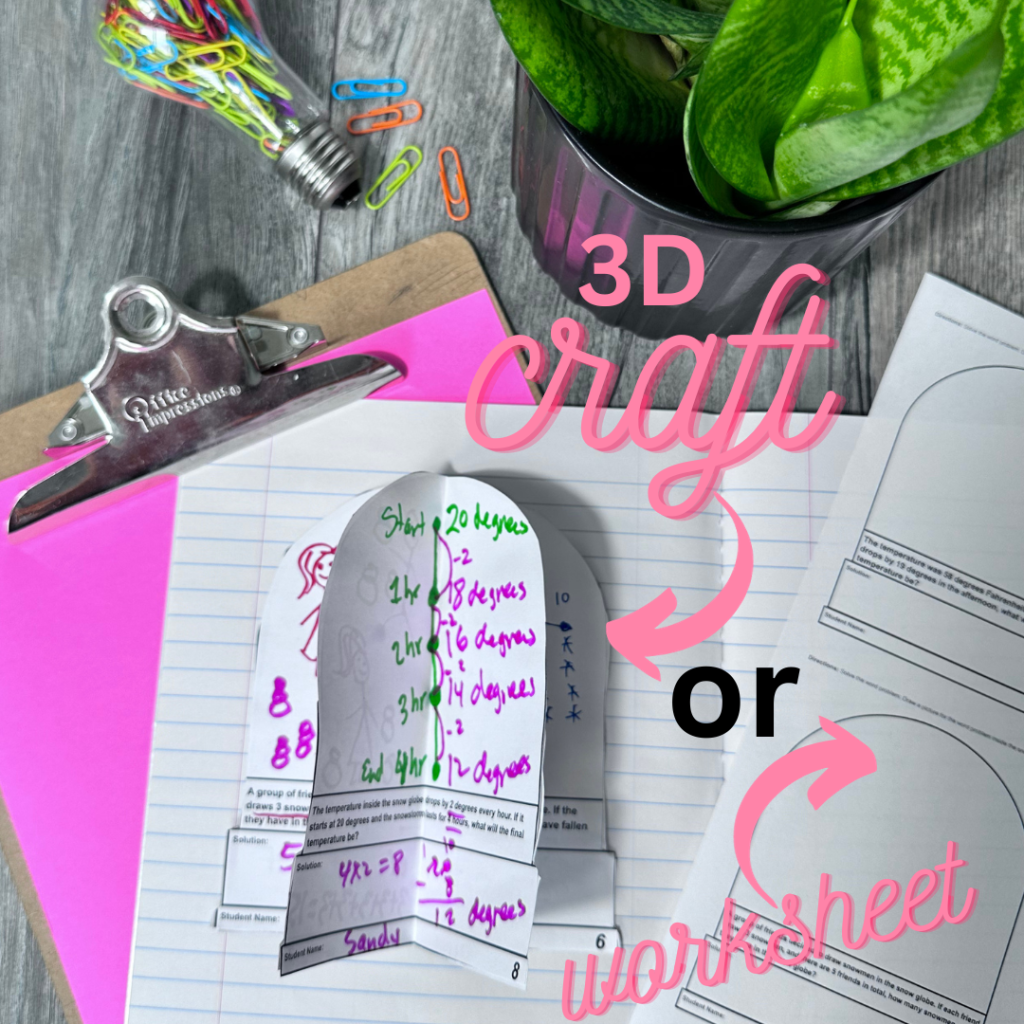
Enhancing Conceptual Understanding: Drawing allows students to break down complex problems into manageable parts. By visually representing the elements of a math word problem, they gain a deeper understanding of the relationships between quantities and the steps required to find a solution. This process not only aids in solving the current problem but also builds a foundation for tackling more complex mathematical concepts in the future.
Fostering Creativity and Critical Thinking: Drawing is a creative process that encourages students to think outside the box. It prompts them to explore different approaches to problem-solving and express their unique perspectives. In the realm of mathematics, fostering creativity is synonymous with nurturing critical thinking skills – an invaluable asset in academic and real-life scenarios.
Enter the 3D Snow Globe Math Activity: Imagine a math lesson where students embark on a visual journey inside a 3D snow globe. This immersive experience is not only captivating but also a highly effective teaching tool. The 3D Snow Globe Math activity brings mathematical concepts to life, allowing students to create and manipulate three-dimensional representations of word problems.
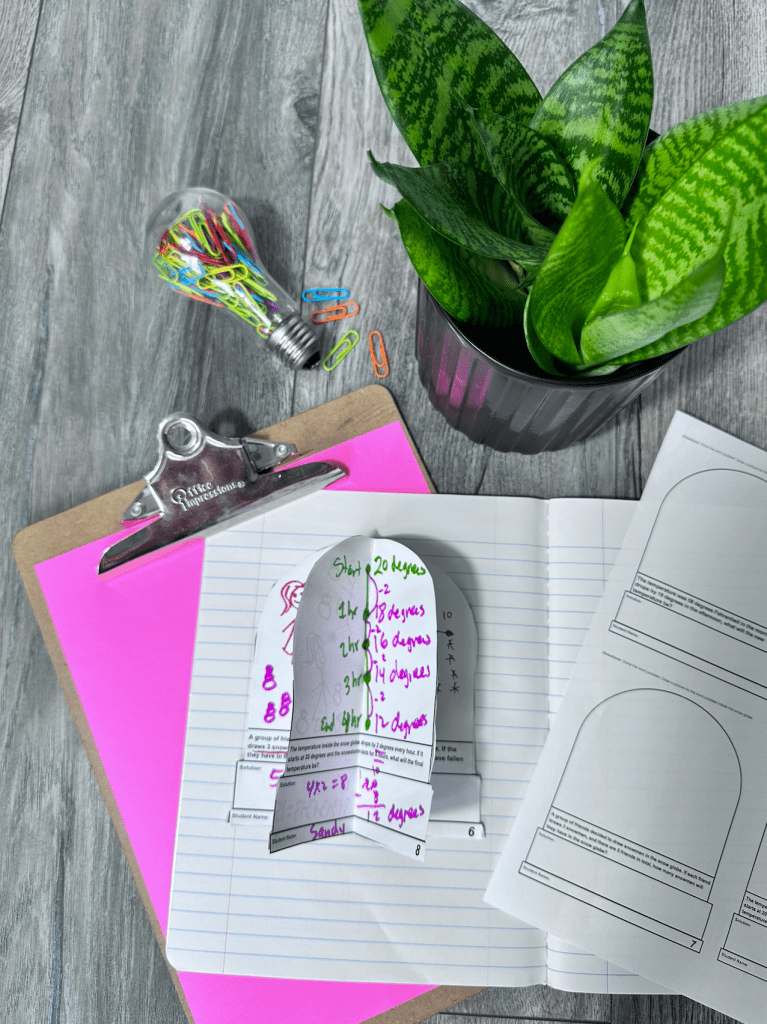
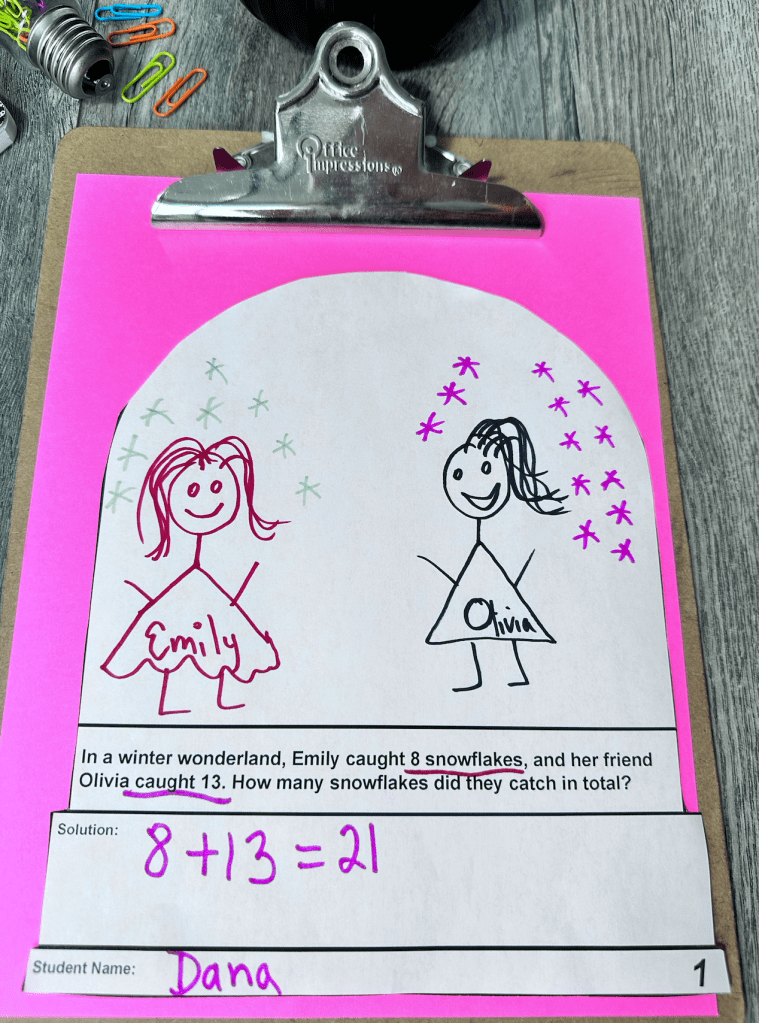
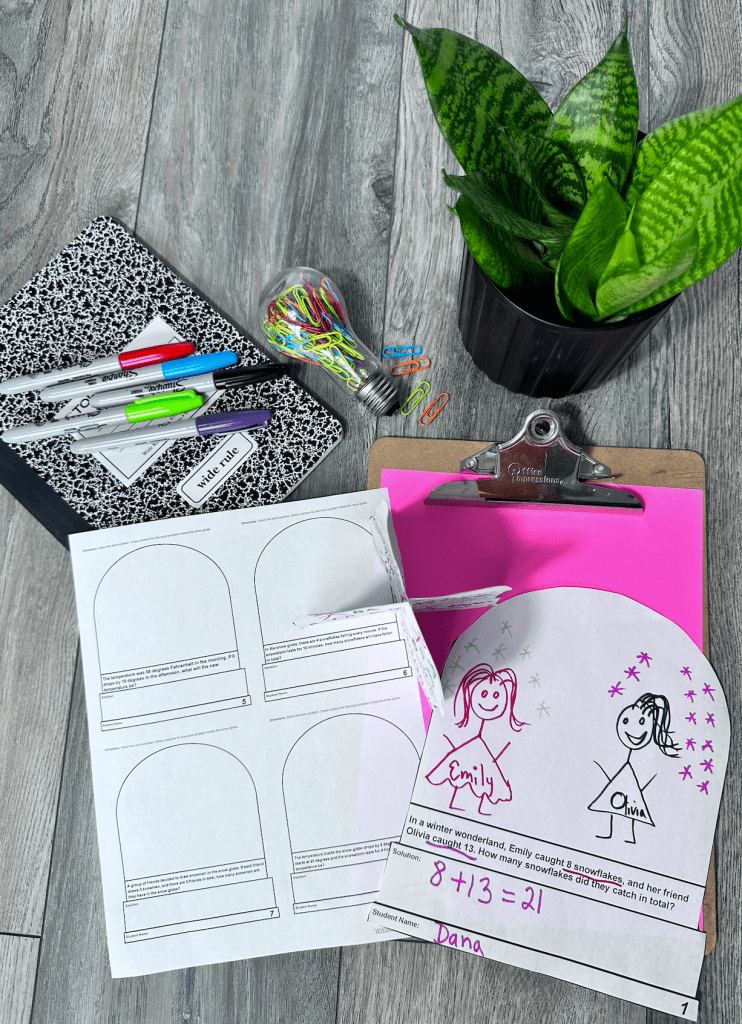
Why this Snow Globe Math Activity is Perfect for Math Lessons:
- Engagement and Excitement: The novelty of the 3D Snow Globe captures students’ attention instantly. It transforms the learning environment into a winter wonderland, making math lessons exciting and memorable.
- Hands-On Learning: The hands-on nature of the activity encourages kinesthetic learning. Students physically interact with the snow globe elements, enhancing their spatial awareness and understanding of mathematical relationships.
- Collaborative Exploration: The 3D Snow Globe Math activity lends itself to collaborative learning. Students can work together to create and solve problems, fostering teamwork and communication skills.
- Real-World Application: The snow globe theme provides a real-world context for math problems, making the learning experience more relatable. Students can see the direct application of mathematical concepts in a familiar and enchanting setting.
- Versatility in Grade Levels: The activity can be adapted for various grade levels, from simple addition and subtraction for younger students to more complex multiplication and division scenarios for older ones.
In the realm of mathematics, the ability to draw out and visualize solutions is a skill that transcends equations and numbers. Incorporating activities like the 3D Snow Globe Math Activity not only makes learning enjoyable but also reinforces key mathematical concepts in a way that resonates with students. As educators, let’s embrace the magic of visualization and create a world where mathematical thinking is not just solved but celebrated in vibrant, 3D hues.
All my best,
Adela


