- Interactive Lesson Introduction: Begin a lesson on the reproductive parts of a flower by projecting the PowerPoint. Use the visuals and labeled slides to introduce the topic, engaging students with a visual overview.
- Guided Discussion: Lead a guided discussion using the slides. Ask students to identify and discuss the functions of each part of the flower, fostering class participation and understanding.
- Review Session: Use the PowerPoint as a review tool before assessments. Run through the slides, asking students questions related to each part of the flower and its function.
- Independent Research: Assign students to explore the PowerPoint individually or in small groups. Have them research additional information on each part of the flower and present their findings to the class.
- Integration with Flower Dissection Lesson: Pair this PowerPoint with my “Flower Dissection” Full Lesson available on my TPT store. Use the PowerPoint for conceptual understanding before moving on to the hands-on activity of dissecting flowers.
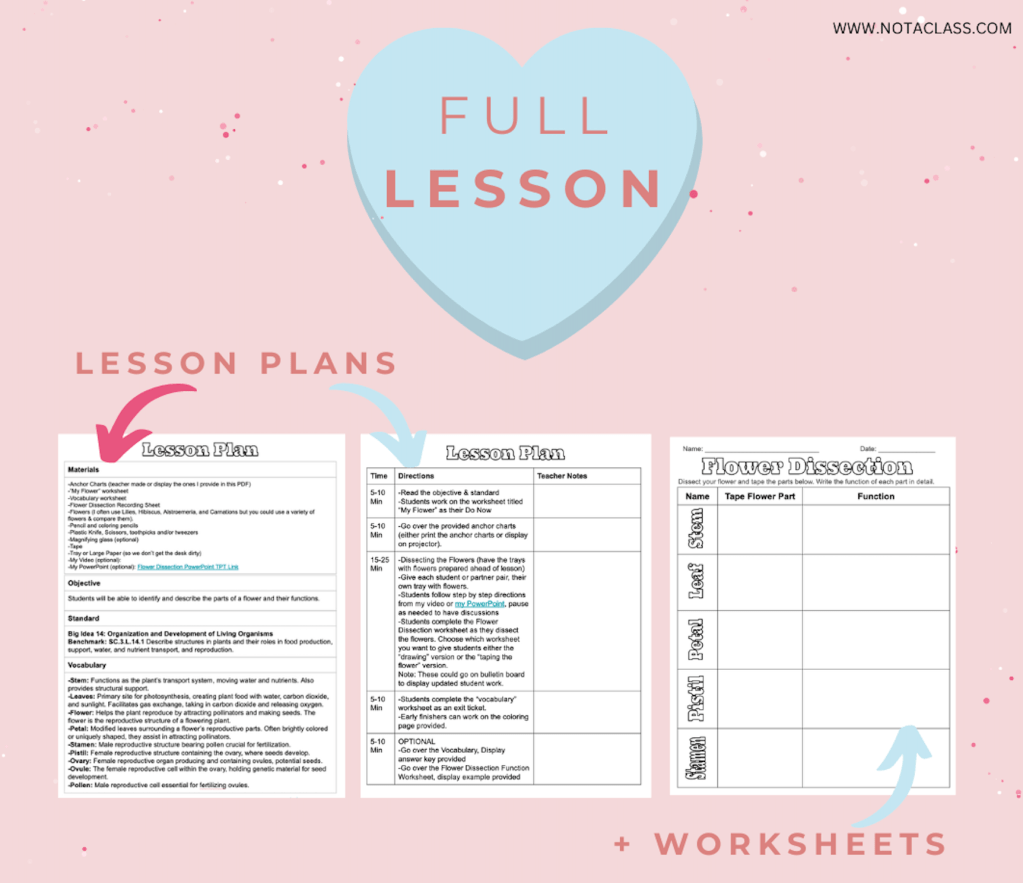
A few details about the lesson:
Objective: Students will be able to identify and describe the parts of a flower and their functions.
Standard: Big Idea 14: Organization and Development of Living Organisms
Benchmark: SC.3.L.14.1 Describe structures in plants and their roles in food production, support, water, and nutrient transport, and reproduction.
Vocabulary
-Stem: Functions as the plant’s transport system, moving water and nutrients. Also provides structural support.
-Leaves: Primary site for photosynthesis, creating plant food with water, carbon dioxide, and sunlight. Facilitates gas exchange, taking in carbon dioxide and releasing oxygen.
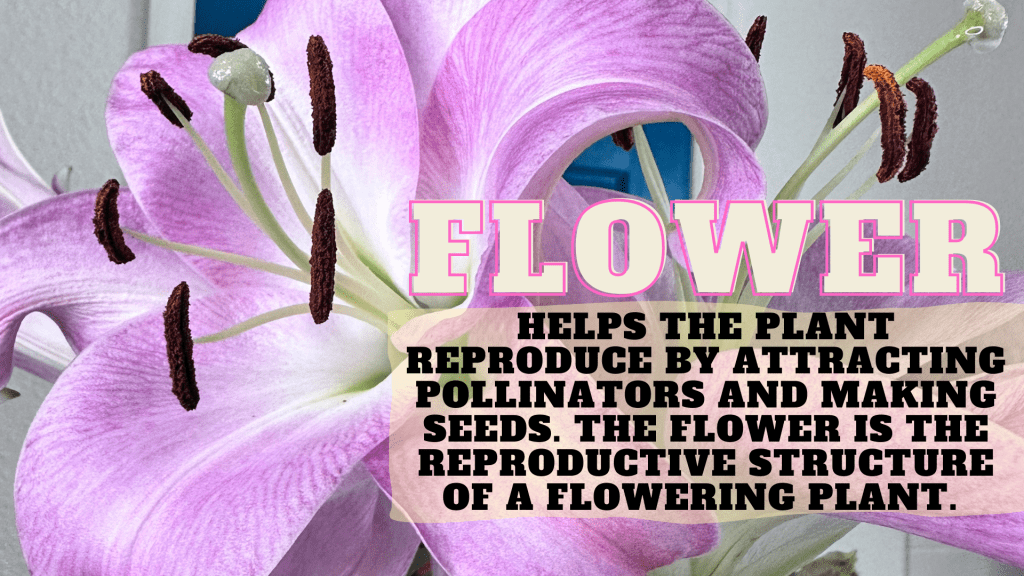
-Flower: Helps the plant reproduce by attracting pollinators and making seeds. The flower is the reproductive structure of a flowering plant.
-Petal: Modified leaves surrounding a flower’s reproductive parts. Often brightly colored or uniquely shaped, they assist in attracting pollinators.
-Stamen: Male reproductive structure bearing pollen crucial for fertilization.
-Pistil: Female reproductive structure containing the ovary, where seeds develop.
-Ovary: Female reproductive organ producing and containing ovules, potential seeds.
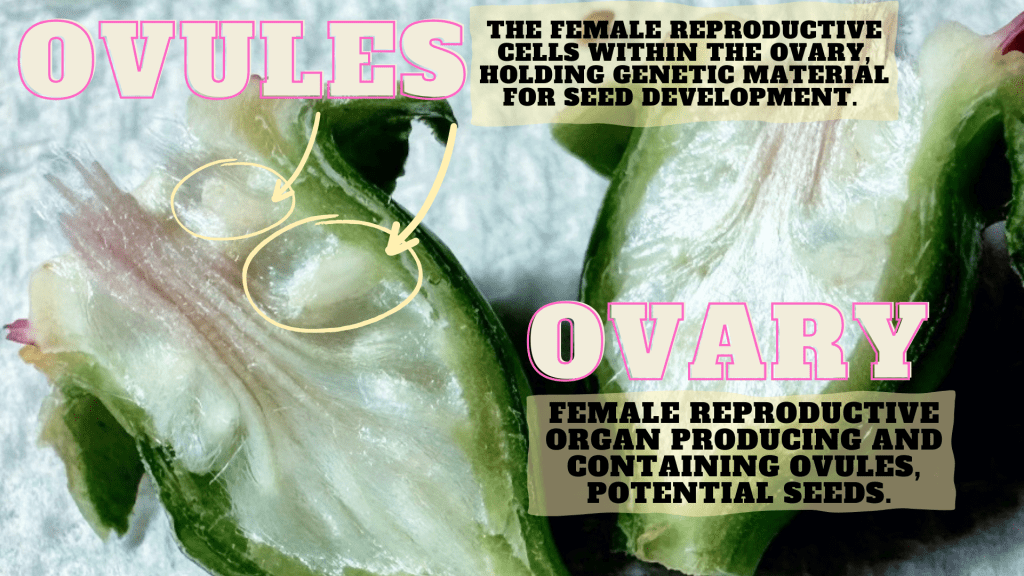
-Ovule: The female reproductive cell within the ovary, holding genetic material for seed development.
-Pollen: Male reproductive cell essential for fertilizing ovules.
Click here for a full preview of the lesson and PowerPoint slides.
Click to see my YouTube video that goes perfectly with the lesson and PowerPoint.
I hope you find these products helpful,
Adela


