
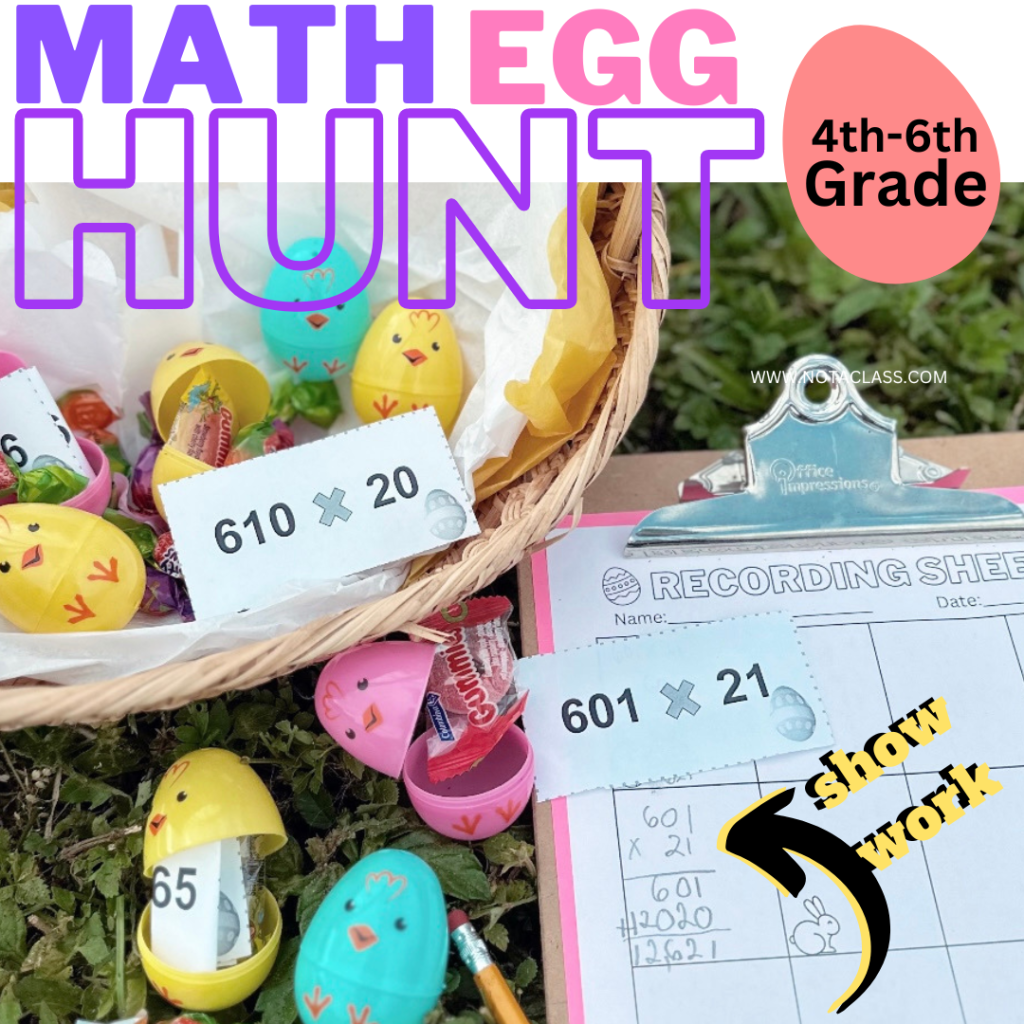
As Easter approaches, why not add a touch of excitement and learning to your classroom with a Math Easter Egg Hunt? This engaging activity combines the thrill of a traditional Easter egg hunt with the educational benefits of solving math problems. Students will have a blast searching for eggs, solving math problems, and, of course, enjoying some sweet treats along the way. Here’s how you can organize this fun and educational activity for your students:
How to Conduct the Math Easter Egg Hunt
Location and Setup:
- Outside: If weather permits, consider holding the egg hunt outdoors. This allows for more space and adds to the excitement.
- In the Classroom: If outdoor space is limited or weather is inclement, you can easily set up the egg hunt inside the classroom.
- Number of Problems: Decide whether each egg will contain one or two math problems. Some eggs can contain only candy, while others will have math problem cards inside.
- Variety of Eggs: Some eggs will have only candy, some will have math problem cards, and some will have both candy and math problems.
Materials Needed:
- Recording Sheets: Prepare recording sheets for students to write down their answers.
- Math Problem Cards: Have a variety of math problem cards ready to place inside the eggs.
- Basket or Container: Provide a basket or container for students to return the eggs once they have solved the problems.
- Extra Copies: Make extra copies of recording sheets for students who work quickly.
Procedure:
- Before the egg hunt, hide the eggs around the designated area.
- Provide each student with a recording sheet and explain the rules of the hunt.
- Students will search for eggs, solve the math problems inside, and record their answers on the recording sheet or in their math journal.
- If an egg contains candy, the student gets to keep it as a reward.
- After all the eggs have been collected, review some of the problems and answers as a class. Consider selecting a few students to display their work.
Additional Considerations
- Number of Eggs: Determine how many eggs you will need based on the number of participating students. Will you need 30 eggs? Maybe it is closer to 100 eggs.
- Class Size: Decide if the activity will be just for your class or if it will involve the whole grade level.
- Problem Selection: Choose which math problems you would like your students to practice. You can use problems that align with your current curriculum or focus on areas where students need extra practice.
- Egg Return: Decide if you want students to return the eggs to a central location or if they can place the problem cards back in the eggs for the next person.
- Stations or Rotations: Consider arranging stations or rotations where only a small group of students searches for eggs at a time. Meanwhile, the other students can engage in independent practice until their turn. Another option is to place approximately 10 eggs in a basket at the center of each station table. Students can then take one egg at a time and solve the problem inside. This approach can assist in organizing the activity and ensuring that all students get an opportunity to participate.
Why Do a Math Easter Egg Hunt?
- Fun and Exciting: The Math Easter Egg Hunt adds an element of fun and excitement to the classroom.
- Engaging and Active Learning: It gets students moving and actively engaged in learning math.
- Variety in Routine: It breaks the monotony of the everyday classroom routine, making it more exciting for students.
- Great for Review: It serves as a great review activity before a test, allowing students to practice their math skills in a fun and interactive way.
A Math Easter Egg Hunt is a creative and engaging way to incorporate math practice into your Easter celebrations. It provides students with a fun and memorable learning experience while reinforcing important math skills. So, gather your eggs, prepare your math problems, and get ready for an egg-citing adventure in learning!
List of my current Easter Egg Hunt Activities:
This list covers 5th-grade math standards, but they could also be utilized in other grade levels. Each link provides a comprehensive preview of the activity.
- Multiplying two digit by two digit numbers
- Multiplying three digit by two digit numbers
- Multiplying four digit by two digit numbers
- Multiplying by two digit numbers BUNDLE
- Adding mixed numbers
- Adding fractions with unlike denominators
- Subtracting fractions with unlike denominators
I create new products every week. Check out my Easter/Spring activities here.


